Scribe Archive
01
The interviewee, a quarter-Jewish man, discusses his experiences in Nazi Germany, including feeling like a second-class citizen and grappling with racial ideology. He recounts how his military service was impacted by his partial Jewish heritage, the varying reactions of comrades and acquaintances to his background, and his family's complex relationship with the Nazi regime. He also shares the story of his aunt, who worked as a nurse and whose marriage to a captain was later dissolved after he was reported missing on the eastern front.
1 Friedrich Schlesinger (50% Jew), 13 April 2002, Hamburg, Ger
Friedrich Schlesinger, a 50% Jewish man living in Germany, discusses being drafted into the Wehrmacht in 1939 despite his non-Aryan status, which initially led to a "Replacement reserve two" designation. He recounts his experiences in basic training, including working with horses and learning Morse code, and his detachment's focus on wire and wireless communication. Schlesinger also touches on his awareness of propaganda and atrocities related to the invasion of Poland, and his resigned acceptance of military service due to the war and the impact of Nazi policies on his family.
01 Hans-Gert Falkenberg 12 April 2002
Hans-Gert Falkenberg, interviewed in 2002, discusses growing up in Germany as a child with a Jewish grandmother and a baptized Christian mother during the rise of Nazism. He describes how he didn't feel Jewish but became aware of antisemitism through his schooling and the departure of Jewish families, leading him to try to prove himself through academics and athletics. Falkenberg also recounts the increasing difficulties his family faced due to his mother's Jewish heritage, including her losing her job and his father being pressured to divorce her.
77B Jürg Schaeffer 6 April 1995, Frankfurt a.M., Ger
Jürg Schaeffer, a German man who served as a non-commissioned officer in the Volkssturm, discusses his experiences during the war, including his duties, memories of a Jewish comrade named Heinz Georg Heiman, and an injury he sustained. He also reflects on his lack of guilt regarding his wartime actions, his near-death experience after a surgery, and his perspective on identifying someone as Jewish.
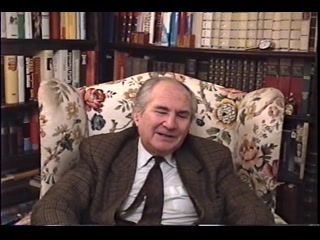
01 Alfred Posselt 4 Jan. 1996, Franz Herder 5 Jan. 1996 & Walter Konar 5 Jan. 1996
The interview features Alfred Posselt, Franz Herder, and Walter Konar, Austrian men with Jewish heritage discussing their experiences during the Holocaust and World War II. They recount their time in the military, Posselt's role as a driver, and their involvement in resistance groups that aided those in danger, including hiding people and providing false medical certificates. They also share their perspectives on the political climate in Austria during the rise of Nazism, the fear of being reported, and the presence of "mixed breeds" (those with partial Jewish heritage) within the military.
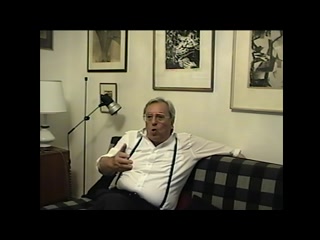
Bryan Mark Rigg - 19-19B Updated Version Helmut Krüger (50% Jew) 27 & 31 Aug. 1994, Berlin, Ger., Harald Steinke (50% Jew) 1 Sept. 1994 Berlin, Ger., and Helmuth Kopp (50% Jew) 3 Sept. 1994 Berlin. Ger
The interview features Bryan Mark Rigg interviewing Helmut Krüger, Harald Steinke and Helmuth Kopp, all of whom are of 50% Jewish heritage, in Berlin in 1994. The interviewees discuss their experiences in Germany during the Nazi era, focusing on the impact of anti-Semitic policies on their families, their personal fears, and their conflicted identities as both Germans and individuals with Jewish ancestry. They also recount how military service provided a temporary shield and opportunities that were otherwise denied to them due to their Jewish heritage.
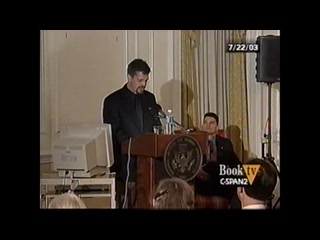
Bryan Rigg - CSPAN Hitler's Jewish Soldiers by Bryan Rigg
Historian Bryan Mark Rigg, who discovered his own Jewish ancestry at age 21, discusses his book "Hitler's Jewish Soldiers," which explores the estimated 150,000 soldiers, sailors, and airmen of partial Jewish descent who served in the German military during World War II. Rigg details his personal background, including his childhood learning disabilities and the influences that motivated him to research this controversial topic despite initial skepticism from others. He also mentions the extensive collection of documents, interviews, and photographs he gathered, which are now housed in the German Military Archives.
Bryan Rigg - Hide in Plain Sight
Bryan Rigg, a former Marine and historian, is interviewed about his research into German soldiers of Jewish descent during World War II. Rigg discusses his findings that thousands of "Mischlinge" (individuals of mixed Jewish and German heritage) served in the Nazi military, some even with Hitler's approval, and the controversy surrounding his estimate of 150,000 such soldiers. He explores the motivations of these soldiers and the complex reasons why the Nazi regime allowed them to serve despite its anti-Semitic policies.
Bryan Rigg - Die Soldater mit - halben Strn
Bryan Rigg, an American historian, discusses his research into German soldiers during World War II who were classified as "Mischlinge" (mixed race) under Nazi racial laws, meaning they had some Jewish ancestry. Rigg details how he stumbled upon this topic and began interviewing veterans who, despite their partial Jewish heritage, served in the Wehrmacht, exploring their experiences with self-hatred, identity, and the complex realities of being labeled "Jewish" by the Nazis while often identifying as German. He emphasizes the surprising number of these soldiers and the previously unwritten chapter of Holocaust history they represent.

Bryan Rigg - Hitler's Jewish Soldiers Price Documentary
Bryan Mark Rigg, an American history professor, discusses his research into "Mischlinge" - individuals of mixed Jewish and Aryan ancestry who served in the Nazi German army during World War II. Rigg details how the Nuremberg Laws defined Jewish identity and how individuals with varying degrees of Jewish heritage were treated, highlighting the complex and often contradictory policies of the Nazi regime. The interview features personal stories of soldiers like Werner Goldberg and Helmut Kopp, illustrating the experiences of these part-Jewish soldiers and the motivations behind their service.
Bryan Rigg - 01Herr und Frau Fritz Kassowitz 4 Jan. 1996
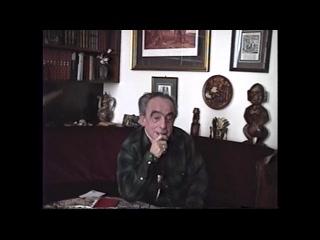
Bryan Rigg interviewed Herr Fritz Kassowitz, who discusses his experiences as a Mischling (person of mixed Jewish and Aryan ancestry) in the German Wehrmacht during WWII. Kassowitz recounts being wounded in East Prussia, receiving treatment in Vienna, and serving in a pioneer unit repairing railroad bridges in Russia. He also touches on his studies at the University of World Trade during the war, his Iron Cross award, and his limited knowledge of the Holocaust while serving.
Bryan Rigg - Die Soldaten mit dem halben Stern WDR
The interview features Bryan Rigg, an American historian who researched and wrote about German soldiers during World War II who were classified as "Mischlinge" (mixed race) under Nazi racial laws, meaning they had some Jewish ancestry. Rigg discusses his initial encounter with this history, sparked by a movie and a chance meeting with a "Mischling" Wehrmacht soldier, and how he uncovered the stories of thousands of these soldiers who were considered partially Jewish by the Nazi regime, regardless of their own religious or cultural identity. He also touches on the personal impact of these racial laws on individuals and families, highlighting the shift from religious affiliation to racial classification as the defining factor in determining one's identity and status under Nazi rule.
Bryan Rigg - 06Bryan Mark Rigg CSPAN presentation on the Rescue of Rebbe Schneersohn
Bryan Mark Rigg, born in Texas in 1971 and raised Protestant, discusses his journey of discovering his Jewish heritage in his early twenties and embracing Judaism. He provides background on his struggles with learning disabilities as a child and how he overcame them with the help of a dedicated teacher and his family. Rigg then transitions to the main topic: his book about the rescue of Rebbe Schneersohn during the Holocaust.
Bryan Rigg - Leon Charney Report on Bryan Rigg
The interview features Avshalom "Abu" Vilan, an Israeli paratrooper veteran, discussing the unfolding scandal within the Likud party and its potential impact on the upcoming Israeli elections. Vilan explains the alleged corruption involving the central committee members selling votes for Knesset seats and the ongoing investigations by the Attorney General. He also analyzes the shifting political landscape and the potential outcomes for both the right-wing and left-wing blocs in the election.
Heinz Blum (50% Jew) June 2001 Maryland, USA Side 2
Heinz Blum, a 50% Jewish man interviewed in Maryland in 2001, discusses his family's experiences after immigrating to the United States, including finding a home and integrating into a new neighborhood. He touches on topics such as his grandmother's experience during the Pearl Harbor attack, his family's connections to figures like Hitler's brother, and his mother's conversion after Pearl Harbor. Blum also shares anecdotes about his family history, his career, and his thoughts on retirement.
Heinz Blum (50% Jew) June 2001 Maryland, USA Side 1
Heinz Blum, a 50% Jewish man living in Maryland, was interviewed in June 2001 about his experiences during the Holocaust era. He discussed his time at a work camp (OT camp), including Allied bombings, interactions with guards, and an attempted escape. Blum also spoke about his complex relationship with his Jewish father, his brief military service, and encountering former Nazis after immigrating to the United States.
Ernst Ludwig (50% Jew) Phone June 2001, Maryland, USA Side 2
Ernst Ludwig, a 50% Jew living in Maryland, USA, was interviewed in June 2001 about his experiences in Nazi Germany. He discusses being expelled from school at 16 due to the Nuremberg Laws, his subsequent apprenticeship as a baker, and his feelings of becoming Jewish when he began to suffer discrimination. Ludwig also recounts his upbringing in a family with both Jewish and Christian traditions and the advice he received to enter the food business as a means of survival.
Ernst Ludwig (50% Jew) Phone June 2001, Maryland, USA Side 1
Ernst Ludwig, a 50% Jewish man living in Maryland, was interviewed in June 2001 about his experiences during the Holocaust. He discusses being transferred to a baker in Heltersleben who provided him with work and shelter, witnessing prisoners from concentration camps, and losing relatives, including his maternal grandparents and his uncle's family, in the Holocaust. He also recounts his sister's marriage to an Aryan man amidst the Nuremberg Laws.
side a
The interviewee is Peter, a Mischling (person of mixed Jewish and German ancestry) who served in the German army during the early years of World War II. He recounts being honorably discharged due to new racial laws, despite his captain's efforts to secure an exception for him. Peter details the process of his discharge, including the supportive behavior of his captain, the denial of his exception request signed by Keitel, a farewell party thrown by his company, and the discriminatory treatment he received upon arriving at the discharge camp in Ludwigsburg, where his military pass was stamped "Mischling of the first degree."
side b
The interviewee is a German individual of Jewish descent who was deported from France during the Holocaust. He recounts his experiences as a civilian prisoner, detailing his transfers between different camps including Drancy, and his eventual escape with a fellow prisoner after the war's end. He also discusses his motivations for seeking out American soldiers during his escape, hoping for assistance due to his family ties in the United States.
side a
The interview features two individuals born in Stuttgart, Germany: one in 1914 and the other in 1916. They discuss their experiences as individuals with Jewish heritage during the rise of Nazism, including their family's reactions to Hitler's rise to power, the Nuremberg Laws, and Kristallnacht, as well as their decisions regarding emigration and military service.
side b
Michael Elhaug, born in Frankfurt in 1927 to a non-Jewish father and a mother whose father was Jewish but refused to identify as such, discusses his experiences as a "Mischling" (person of mixed Jewish and Aryan ancestry) during the Nazi era, including serving in the Wehrmacht and the complex, often paradoxical, attitudes towards "half-Jews" at the time. He recounts his family's survival, his postwar life in Germany, and his reflections on the war, emphasizing that he and others hoped Germany would lose. He also touches on the racial theories of the time and his family's connections.
side a
The interviewee is Peter, a soldier in the German army during the early years of World War II, who was later discharged due to new racial laws identifying him as a "Mischling of the first degree" (of mixed race). He recounts how his captain, despite being a strict military man, tried to protect him from the discriminatory laws and the events surrounding his discharge, including a farewell party arranged by his company. Peter also details the hostile reception he received upon arriving at the military camp for dismissal, where his identification papers were stamped with his racial classification.
side b
The interviewee is a German individual with a Jewish mother who was deported to France and served as an interpreter for the Americans. He recounts his experiences as a civilian prisoner, including being transferred to French custody, imprisoned in various camps like Caserne Dupleix and Drancy, and eventually being forced into a German uniform. After the war, he escaped from a farm where he was working and journeyed back to Germany with a companion, eventually seeking help from American soldiers.